The Street

One afternoon late last summer, this lady walks into the Ark building. She’s middle-aged and speaks Romanian with the accent of someone who’s lived abroad for longer than she can remember. Timeless chic, scarf, lively black eyes under a fringe, beret cocked to the side, she’s somewhat enraptured by the place.
I show her around and tell her about how the new owners had saved this big old ship from falling into nothingness ten years ago.
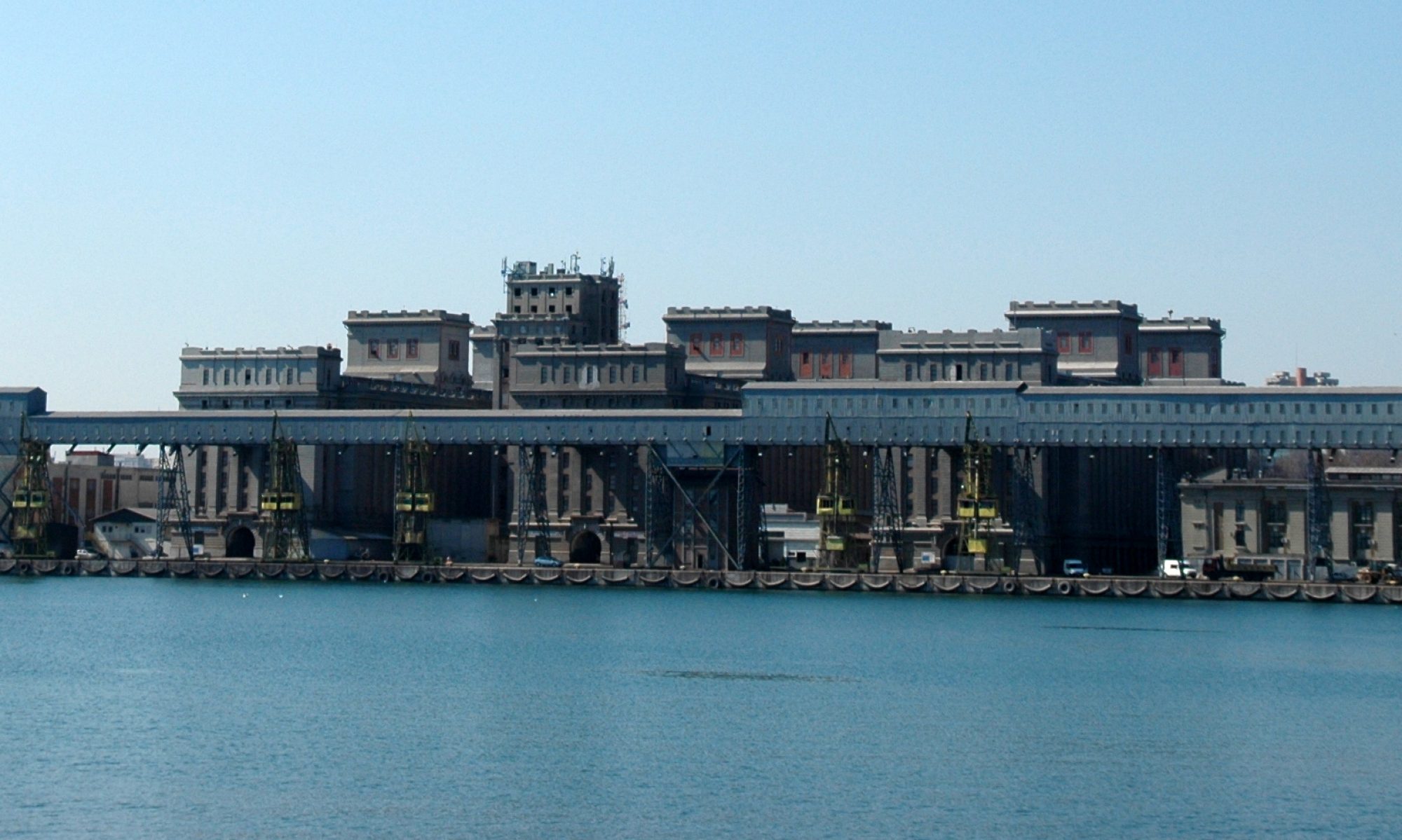
The former Commodities Trade Building is one of the few survivors of the Uranus neighbourhood, which had been razed to the ground by Ceausescu in 1982-84, nothing being built on the wasteland instead.

She’s fascinated, the building was renovated so carefully; memories come back. She’s dreamy, but not very talkative.

In the end she says goodbye, delighted about our little chat and walks away – then she stops at the door and turns around with a frown.
‘Actually, maybe you could help me find this street I’m looking for.’
Sure, what street?
‘It’s strada Minotaurului. It must be somewhere around here, but I can’t find it.’
Lady, there must be a mistake; I guess you mean some other name. Are you sure?
She looks at me, shaking her head, and then takes out a map and points sullenly at the street shown on it.
‘It should be near by, around the corner somewhere.’ The map is new and shiny, the street’s there all right, M-i-n-o-t-a-u-r-u-l-u-i it says, I can see it, but it’s…
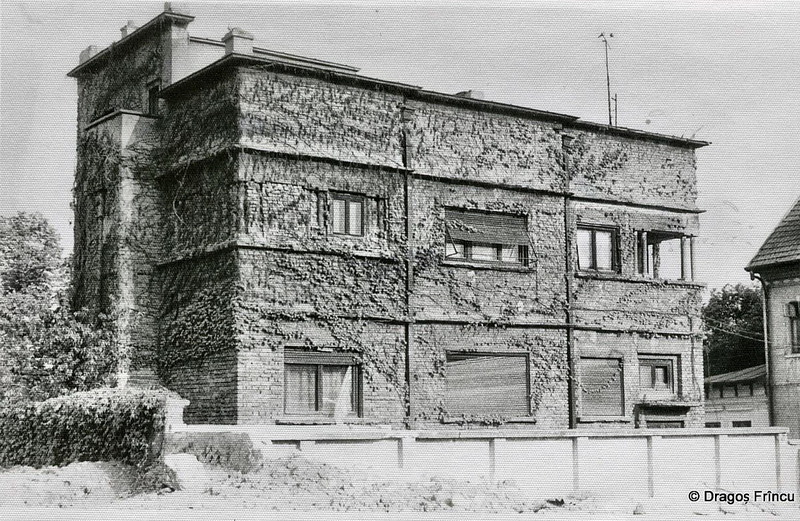

21, Minotaurului © Dragos Frincu
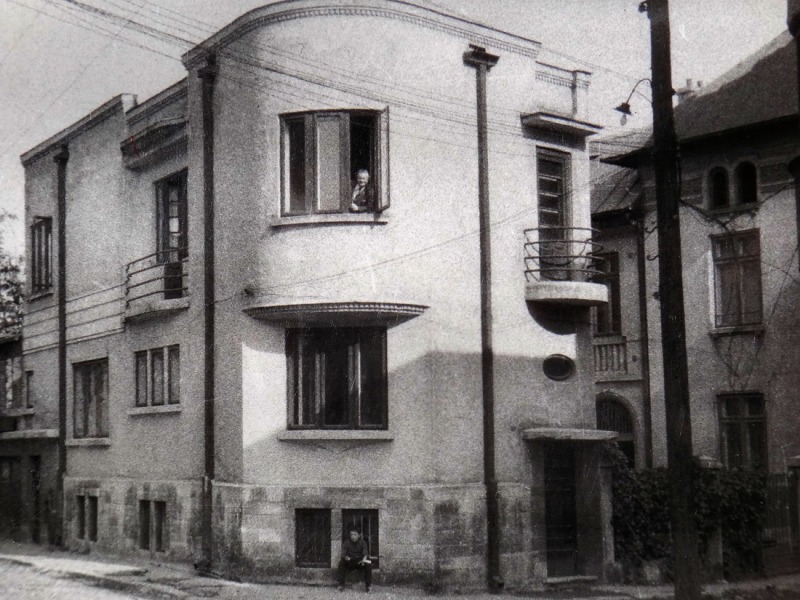
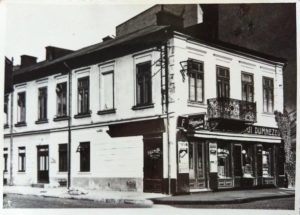
Gheorghe Panu str. – Schitul Maicilor str. Photo from Mihai Isacescu

Gone.

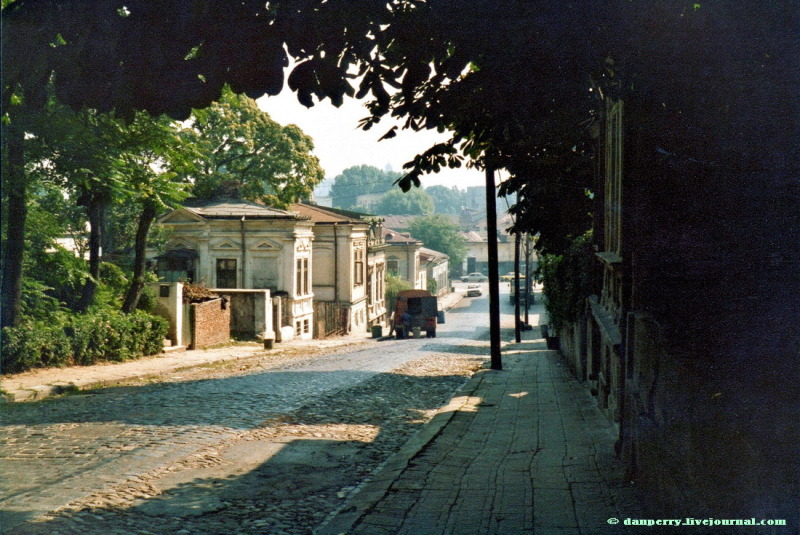
Arionoaiei Street © Dan Perry

Strada Minotaurului was demolished in 1984, along with all its houses and trees and gardens, to make way for the new civic centre.
Its people were thrown out and scattered all over town, distributed to the new anonymous concrete blocks of flats.

Although…for a moment I’m hesitating. I feel like running out to see it with my own eyes. Maybe I’m mistaken and she’s right and the street is still there. Opposite of our building, a bit further down the road, with its trees and cobblestones and people and tiled roofs. The diggers were just a nightmare.

Somebody opened their gate on Lazureanu this morning and left for work, walking down the sloped sidewalk. They’ll be home in the evening, passing the stores and the Cosbuc cinema on that rattling tram from Unirii Square. On the steps on Ecoului, kids are still playing. At Meteorilor, a few older ones are skipping school and hiding with their cigarettes behind an old iron fence. A couple are clinging on to one another as if it was their last day on earth, in the shadow of the old chestnut tree on Arionoaia. Somebody is loading his furniture off a truck on Uranus. A nun scurries out of the Schitul Maicilor monastery, busy as nuns always seem to be. It smells of freshly ground coffee from a house, were the old lady awaits her nephew to return from the military. Cazarmii, Salvatorului. Someone else just finished roasting the joint, opened a window and is calling down ‘Lunch’s ready, boys, wash your hands and come up – now!’

If I run out right now, I will see them all!

The lady is still looking at me, waiting for an answer.
‘It was there, if you walk out, left hand side. But now it’s…gone.’
She smiles, ‘No, madam, there must be a mistake. Minotaurului is still there, look at the map.’
I can see the Parliament’s Palace is there on the map, easy to spot, enourmous as it is. The nightmare is as real. But – the academy building is missing; all the old streets are in their places, LazureanuMinotaurului and EcouluiMeteorilorArionoaiei and Salvatorului, with Ion Taranu crossing them. For a moment, the children are still hanging on the corner, the couple is snogging, and mom’s calling her boys from the window, lunch’s ready, and the tram rattles around the corner.

But it can’t be. I had walked up that hill 2 weeks before, over the wasteland in front of the unfinished academy building. There’s only shrubbery there now, hundreds of hectares of weeds and thorny bushes cover the hill where these houses stood in which these people lived. If you dig in the dirt with your shoe, you can still find some bits of a cobbled street under the bushes.

She hands me the map and points at the little street. The map is brand new.
I ask her, ‘Lady, where did you get this map from?’
‘At the Romanian stand at a tourism fair, back home in the States, last year.’
She folds it carefully and walks back to the door, smiling at me.
‘Don’t you worry; I’m sure I’m going to find it. Thanks for your kindness.’

Link to our platform and exhibition URANUS NOW, 2019

A wonderful superposing of pictures from different times.

Watch a movie from demolishing times, 1984, here.

The Uranus Neighbourhood – Minotaurului street in the lower third – THEN…and NOW

Reason to Believe

An ordinary Wednesday in downtown Bucharest.
2 streets are blocked by a long line of relic-worshippers.
An adjacent street is blocked by flower-vendors.
Gendarmerie, paid from our taxes, guards the line.
I wish our taxes were used to pay for education.

A song to go with it: Ugress, Reason to Believe.

Not so long ago, in the 80s, people would queue for food. Author unknown

It’s all gone. Palmyra

There are no words to describe the absurd horror of blowing something up that was built with such delicacy and skill as the temples of Palmyra.

Temple of Bel. 2004No situation describes the actual times better: a bunch of uneducated fanatics runs around blowing up in a matter of minutes what has been put up more than 2’000 years ago with more skill and craft than we can deliver today with modern machinery.

Great Colonnade at Palmyra, 2004.

Actually, it’s all about looking for hidden treasures to fund warfare and making it look like religious zeal.
The powerful nations keep away, it’s about antiques and therefore not their (democracy-spreading) business. The residents, intimidated and destabilised, begin fleeing towards those very democratic countries, whose governments are then taken aback and don’t know how to react.

A July morning in 2004, 6am

Memories of walking down those majestic streets 22 m wide ten years ago and passing the imposing walls and columns 12m high almost choke me now. I had hoped to come back one day in a month other than July.

Until May 2015, all people passing had respected the work of the ancients. 

The sands would have taken better care of the ruins, had they never been retrieved from it.

The amphiteatre, 2004. 20 people were shot here in May 2015. Ten times more were killed until August, at least one third were civilians..

There is nothing to go back to. Gone are the marvels now. Their guardian died trying to save them from looting and destruction. The valiant head of Antiquities Department in Palymra for 50 years, Khaled al-Asaad, 82, was captured, interogated about hidden treasures for one month and then, for his refusal to cooperate, beheaded last August in front of the very ancient stones he was trying to protect.
Do stop using the word ‘execution’ for similar acts: there is no ‚lawful penalty’ or ‚state’ or ‚trial’ linked with this kind of attrocity. It is murder.

Altar. Temple of Baalshamin, built in 131AD. 2004.

What happened since last August? The loathed bunch of freaks finances its existence by selling loot. I wonder who’s buying. And who keeps selling dynamite to creatures which ruin in one day what took years to accomplish and stood there for 2’000 years.

A lizard hiding in the altar wall, 2004

Once, under Queen Zenobia, this was a place of both power and tolerance, where different eastern and western cultures interacted. Not even the Mongolian Timurids dared to destroy what survived from the Neolithic times and what the Romans had built under Diocletian.

Destruction in 2015. ©REUTERS/Social Media

Meanwhile, there are 60’000 people trying to flee from this madness – and Europe keeps debating and discussing, trying to sit it out, make it go away.

While everybody sits around yapping and bawling on overpriced devices designed in California and made in China about the rights of borderline cases in countries whose people don’t give a flying fart about what happens here.

 Jordan, Za’atari, Syrian refugee camp, 2013. 122’700 people and 5’000 coming in every day. From Wiklipedia

Places are being pillaged and there are more people on the run than after WWII – but nobody seems to care about what Syria is going through or see the great efforts Jordan, Turkey and Lebanon are making right now.

Jordan, Za’atari refugee camp, opened 2012, fourth largest in the world. Photo: Brian Sokol / UNHCR

So many lies everywhere. These are dark times and the end is nowhere near in sight. Let us please at least stop lying to ourselves.

The way in. ©The Economist from August 29th

Later edit, November 12th, 2015. The refugees are in Europe. Almost everywhere. Not in Romania, where there’s nothing much for them to be found except animosity and poverty.

In generous Germany’s harbours there are 80’000 people waiting for something. And winter’s coming.

Ski

The time was early 1982. My dad must’ve taken the picture. We were in Predeal for a ski cup, as you can easily recognize by the numbers on the people’s torsos.
These were his colleagues at the factory where he had landed as an oil engineer.

Times were murky. We’d go skiing as often as possible, because there was no other distraction from the routine. We’d all stay at some villa, which once had belonged to some…bourgeois, before the war. I’ll always remember the spaces as – cold and somehow strange. We’d all sleep huddled together in the same room. In the mornings, us kids would watch the grown-ups trying to fry raw cut in half eggs, which had frozen between the windows over night, on a rather improvised camper heater, attached to a smuggled gas bottle someone had brought along.

1982. People in a distant galaxy, it seems, are shaking their limbs to the sound of MJ’s Thriller. Madonna makes her debut and gets her first contract signed, while everybody’s wearing terry cloth stripes on their wrists and heads, in horrid neon colours. Shoulder pads, acid washed jeans and starry patterns rule the dance floors.
Prince William gets born to Lady Di in June– another one to follow the hairdo- and fashion sins of the moment.

By the time we’re competing in the Carpathians, Argentinian troops invade the British Falkland islands, on February 4th.

Grace Kelly drives off a cliff in Monaco, later that year, in September.
The Delorean motor company goes bankrupt.
Kohl becomes chancellor of Germany in October.
In November, Leonid Breshnev dies in Moscow. Yuri Andropov, former head of the KGB, takes his place as head of the Communist Party of the Soviet Union.
Lech Walesa is released in Poland after a year in prison.

The mountains were quiet and peaceful. We’d go there on every possible occasion in winter, because Bucharest had become dark and increasingly menacing. Ceausescu and his lot had started demolishing whole neighbourhoods, in order to build a new stronghold against capitalism.
Excavators were ripping deep trenches in the mud, were once houses stood and kids played on the cobbled streets under age-old trees. The city turned more and more silent, dark and scared. Grocery stores and markets looked emptier every week, while the lines for sugar, eggs, sunflower oil and – even toilet paper – grew. People just stood in lines in front of random stores, hoping some of these products would miraculously show up in the shelves. Gas, water and power shortages contributed to the fight against the imperialist enemy.

The system was keeping everybody busy.

I remember those winters as cold and dark, at best grey. I remember my parents speaking less and looking more tired, worried.
Naturally, I remember feeling protected – a lot more than I feel today.

But…this was because I was a kid, not because times were in any way better. Adults would bear the weight of the worries.
I just used to linger in the staircase and ask ‘When are we leaving for the mountains?’ innumerable times, no matter who’d pass me by.

I might look like some kind of a princess on that pic, but my biggest worry was not loosing that leather bag – and the contest. Instead of feeling protected and surrounded by caring people, I’d compete, in my head, against anyone and everyone, except the tall guy, Gil, whom I always admired.

Dad and his mates would soon go back to working at their factory, which does not exist anymore. I’d start school that next fall – about the time Grace Kelly drove her car off that cliff.

A few years later, the Berlin wall falls and there’s major change in the air all over the world.

It’s been…33 years since then.

On your birthday

On your birthday, I thought of you.

I walked home round 3 am through some darkened alleys, which once were streets.
Now they’re hidden behind some ugly blocks.
I felt spring was in the air and I smelled the river,
as I walked beside its black water skirting the old town.
The streets were seething with Friday night fever.

I passed that huge line of cabs we’d never notice in our endless talks
on the way to my place, on nights like this one.

I’ve missed you so much since you’re gone.

On your birthday, I filled the house with white flowers.

But then I saw the mistletoe you hung over the doorframe.
I remembered your hands, as they were tying it there.
Your voice. Your skin.

You disappeared, as if I menaced your mere bones.

You walk on different streets now, under a different sky.
You carry this shadow around you, selling it off as freedom.
Deep inside you, you know. It’s slow of sale.

Yours must be a sad life.

Otherwise you’d have never come near me, in the first place.

On taming wild beasts

When I was small, people would ask: ‘What do you want to be, when you grow up?’

There were always several answers in may head, so I’d need a moment to answer.
‘Storm!’ or ‘a millionaire’, I’d say sometimes.

Often I thought I’d like to be a tamer of wild beasts. To understand the languages of many and be able to handle their different ways. I’d be able to talk to owls and falcons, lizards and foxes, tigers and buffaloes…

Time passed by – and I became something else.
I do not want to tame beasts any more, I’d rather prefer to be like one.

A tiger, largely solitary, strong, unimpressed by ants or humans and their small struggle.
Minding his own business. Equally at ease on the ground, as in water.
Sharing food and territory amicably, whenever the case.
Just being.

‘You only have to let the soft animal of your body
love what it loves.’ Mary Oliver, Wild Geese

We need to talk.

“You woke up, washed your face, put on your clothes,
went by your business,
Shaking hands, passing smiles, counting coin…
Got a secret?
Can’t tell nobody.
Carry it close, dawn to dusk.
Pick up tomorrow,
All over again.
Life
Ain’t nothing at all.”
Daughter Maitland – St. Louis Blues. ‘Boardwalk Empire’

We need to talk’, she said.

By that time, there must have been nothing left to talk about, anymore.
Should have listened closer, way earlier’, she thought.
‘Should have said something, earlier’, he thought.
Cracks were already going all the way through the sky.

The Pharmacy

‘Sag mir, wo die Blumen sind’

Long time ago, before the World Wars, there were two German pharmacies in Bucharest. One was Thüringer’s, on 43, Elisabeta blvd. the other one was ‚La Ochiul lui Dumnezeu’ (‚At God’s Eye’), opposite to Stirbei Palace, on Calea Victoriei 138.

In 1939, on the occasion of the latter’s centennial anniversary at that location, a collection of ancient pharmaceutical devices was exhibited in the windows of the corner house: jars, tin pots and delicate scales, graters, mortar and pestle sets of various materials, to grind powders from which lozenges and ointments were made.

Behind the house, in a herb garden, various plants were cultivated for their specific uses:
thyme, for cough drops, sage, for disinfecting tinctures, several species of mint, for the stomach troubles, valerian, for treating insomnia, marjoram and lavender, against pain and unrest, rosemary, against migraines and blood pressure, dill and fennel for tummy teas, chervil for the eye bath.
Celandine (rostopasca), said to cure infections and even tumors. Centaury and artichoke thistle, as antioxidants, for liver, rein and blood problems. Horsetail, hemostatic and similar in effect with today’s aspirine. Yarrow (‚soldier’s woundwort’, or ‚coada soricelului’), that would stop bleedings.

This phial contains a few age-old grains of juniper, called ‘Wachholder’ in German. It was probably taken to the household for the kitchen cupboard and thus escaped the pharmacy’s fate.

Mr. Carl Schuster, the owner, had come from Transylvania in 1829 and opened a pharmacy in Bucharest. His brother Gerhard had also opened one in Vienna, on 18, Währinger Strasse, under the name of ‘Zum Auge Gottes’ (which means the same in German).

Gerhard and his sons all died in the First World War. Today the Viennese pharmacy moved to 79, Nussdorferstrasse.

Carl Schuster married in 1840 in Brasov and brought his wife to live with him in Bucharest. Their granddaughter Friederike married in 1920. Her husband, Albert Prall, was a 2m-tall officer freshly out of the Theresian Military Academy in Vienna. He left the army to study and become a pharmacist as well, in order to be able take over ‘God’s Eye’ one day. His story here.
When the Second World War started, Martin Schuster, Carl’s son, was already too old to be enrolled. He spent most of his time at the pharmacy, trying to offer help to whomever needed it.

The tides had turned: Romania switched from neutral at first, to the side of the Axis Powers after the Soviet invasion in Bessarabia and Bucovina. On the 23rd of August 1944, King Michael I removed marshal Ion Antonescu and Romania joined the Allied Forces.
In a tempestuous withdrawal, during three days, the Luftwaffe covered Bucharest with a carpet of bombs.  (This, after the Allies had severely bombed the city on Easter that year.)

On August 25th an infantry platoon in company of two tank destroyers rounded up Legatia Germana at 174, Calea Victoriei (opened in 1880, became later Cazino Victoria). Not accepting the defeat, German Embassador Manfred von Killinger shot his secretary first – and then killed himself.

When the sirens started howling again the following night, Mr. Schuster refused to go to take shelter in the Stirbei Palace cellars, claiming that he had to be at the pharmacy, in case somebody would have needed help.
In an attempt to hit the 52.5m high building of the Telephone Palace, the National Theatre on Calea Victoriei was put to ashes. The whole neighbourhood was set ablaze, as the bombs also hit the gas pipes on the main streets.

Eventually, as people from the palace returned and insisted again, Martin Schuster joined them, but left the pharmacy unlocked: he pulled the door shut by its handle, saying that someone might still need bandages, disinfectant or pain killers.

One of the last bombs fell into the pharmacy’s ventilation shaft that night. It landed in the basement and detonated the building together with its herb garden.

Coming out of the shelter the next day, he found the door handle on the pavement.
That – and a bundle of papers that had been locked in a safe – were the only remains of ‘God’s Eye’.

Eventually, with the help of his son in law, he put together a new pharmacy, which was nationalized in 1948. While returning from work one night in March of 1952, Albert Prall was killed by drunken soldiers, together with his Turkish colleague, whom he was trying to protect from being bullied in the street.

But this is a different story.
Albert Prall’s daughter is my grandma.
My mother was born in 1948.

Update on 2017-01-12 12:23 by Doro

Today I helped grandma out with the Christmas tree. I climbed up the ladder and got the box with the decorations down from the top shelf. The box!… one more piece that survived from the pharmacy!

May you have a peaceful and happy Christmas with your loved ones! May we never know hardship and duress.

The Counter

The Counter at Grand Central Terminal, 1929

I once had this dream. Don’t remember if I was actually sleeping – or just slipping away.

I dreamt I was completely worn down by my life as I knew it. Exhausted by all the painful memories that were blurring all the positive ones. Roaming around every day and trying new stuff, but it wouldn’t work.
Thinking, what doesn’t kill you, makes you stronger.
Realising, after a while, that the stronger you get – you only get lonelier.

After a while, I got so weary, I couldn’t learn how to enjoy whatever was going to come anymore at all. I’d only see the lousy sides of everything and would draw miserable conclusions, so life would increasingly become a downwards spiral, with little variation.

I kept searching for a way to change it.
After a while, I learned that there was a counter where you could go to and give up your life, as a package, and ask for another one in return.
But you wouldn’t know what was in the new package, before you traded the old one in. You had no way of choosing.

Eventually, I found the building. It looked like a station, although you could walk around it. It had only one large double door.
I watched it from a distance, time and again, wondering if now was the right time to ask for the exchange.

I’d sneak around the impressive thing, observing the people who went in and out. They were not showing any major change in mood. But they’d come out with a different look on their faces. As someone else.

Every time I’d go there, I would toy around with the idea. And wonder.
Maybe the time’s not ready yet- imagine, you’ll give up all your memories, entirely.

All of them.
You wouldn’t know your loved ones anymore.
You wouldn’t remember how you discovered sunshine, in a plastic fishbowl, one morning.
Or your grandma’s generous smile. Sour cherries on mown grass.
The taste of freshly ground pepper on tomatoes, that grandfather made you eat one day, because ‚You can’t say you dislike something, without ever having tried it.’

You’d never remember that day dad held you on his knees, while you were crying over your first bleeding knee, and how he told you that it was going to be ok.
That way the streets smelled after a summer storm, or how mom would come home with a sunflower from ‘patriotic work‘ in a nearby field. Exhausted, but smiling.

You wouldn’t know your favourite perfume anymore. Or your first kiss.

Or your first trip abroad, when you discovered ‚the other world’, Switzerland! The land the old ones had told so many stories about. The wonderful house on the hill, where your godmother lived!

That amazed way in which someone, who had really mattered back then, had looked at you one morning.
Your first flight, alone! The travels!
…Those warm hugs with friends, when you came back, after all these years – it took them a couple of years to trust that you were going to stay, this time.

That crazy chase in the streets, one short happy night.

All of these were linked to painful memories, that would seep through, just when you were recalling the good ones!
The loved ones had judged you and had turned against you so many times, for no big reason,
the fish bowl had mysteriously disappeared one day.
Grandma had died years ago – and nobody smiles like that anymore these days. Most cherries had had worms in them – how could she eat them without caring!
Dad had told you, furious, one day, “You are as reckless as your grandfather used to be.” Grandfather had died when you were six years old and you don’t really remember him that well…

Back then, you`d always have bleeding knees in summer, because you were invariably veering too close to the corner of the house with your bike. The torn lip was from your first humiliating fight at school.
After that, things had gotten worse for years: you remember having been involved in more fights than others would remember their afternoons of holding hands and kissing behind the school.
Mom’s face looks ashen with exhaustion almost every day now, but she still keeps trying to save the world. And there’s always so much more to be saved than is humanly possible.

So many other women are wearing your perfume. The guy who gave you that first kiss had told you, two days later, that he had only kissed you out of ‚duty’ and that you should forget about it, because he knew you had been fancying him for two years now…

You had never encountered the Switzerland of their stories – it was probably gone long before you were born – and the new one you had found instead had, in time, turned a very cold face at you.

That someone with the rapt look on his face had cheated on you in a terrible way.
You had flown so many miles alone, wishing there was someone waiting for you at the airport, that the mere memory of those flights would turn your stomach.
So much about the friends.

And the chase that night? He had been drunk and exuberant – and had returned to his girlfriend the next day – and you were probably the only one to remember that night in a lovely way anyway. It was gutless and sad, because you knew him since you were kids, so you trusted him.

So many things had been unclear – and you had turned them sunny in your mind, only to be disappointed afterwards.

So, here we are now. Have it, all of it, the whole package, with all its memories, let someone else delight themselves with its content, may they enjoy having that enthusiasm, the wits, your courage and your smile. Those skills, your love of so-many-things-in-this world, books and horses and languages and everything. Let someone else have it all! …And take that gruesome hypersensitivity along with it, too.
Maybe they’ll handle it better.

What if there are other, much more terrible lives, that people come to trade in? Are you feeling you’re there, now?
Would you trade your whole life in, for that?
he said, frowning.
Only desperate souls come to trade their lives in at this counter.

Smart ones. Because happy simple souls can`t even find the place anyway.
Would you switch with another desperate soul,
is your misery so much sadder than theirs?

I never found the counter. And, I must say, I don’t think of it that often.

Lately I think that “in the battle between you and the world, bet on the world”, as the saying goes.

I also wish to learn how to enjoy this world, instead of trying to battle it.

I guess I’m a slow learner.

The fig tree

In the garden of the house I grew up in, there’s this fig tree. Maybe young grandma planted it, in the late 30es, shortly after the house was built.

Winters here are often cold: there’s -18°C outside now. So, every once in a while, the fig tree doesn’t make it to spring. Every time I see the withered branches, I think to myself ‚So, this time it’s over.’

Somehow, we never even liked eating its fruit: they take so long to ripen, looking indecent all summer, in their shrivelled green skins.

Every time the tree withers, after a few weeks, an amazing little sprout shows up in the ground, just a few inches away from the old stem. It takes 3-4 years to grow back to the size you can see in the picture. By that time, next winter will be a cold one…

I never understood the fig tree parable in the bible. It seemed like a stub: some crucial information must have been left out, so the story makes no sense to me. Why curse the fig tree for not bearing fruit, if it wasn’t the season for figs anyway?

Once I read about Sylvia Plath’s fig tree.

“I saw my life branching out before me like the green fig tree in the story. From the tip of every branch, like a fat purple fig, a wonderful future beckoned and winked. One fig was a husband and a happy home and children, and another fig was a famous poet and another fig was a brilliant professor, and another fig was Ee Gee, the amazing editor, and another fig was Europe and Africa and South America, and another fig was Constantin and Socrates and Attila and a pack of other lovers with queer names and offbeat professions, and another fig was an Olympic lady crew champion, and beyond and above these figs were many more figs I couldn’t quite make out. I saw myself sitting in the crotch of this fig tree, starving to death, just because I couldn’t make up my mind which of the figs I would choose. I wanted each and every one of them, but choosing one meant losing all the rest, and, as I sat there, unable to decide, the figs began to wrinkle and go black, and, one by one, they plopped to the ground at my feet.” – from The Bell Jar, 1963

For such a long time I felt just like this. There were so many attractive options and – I was scared that choosing one meant, I’d decide against all the other ones.
Fortunately, I do not feel like that anymore.

The fig tree is not old, because it always starts anew. There were times when it came out again about 4 meters away from where it once stood. But it did – and it’s the same, somehow: it never forgets about spring and never looses the wonderful shape of its leaves.

It taught me this wonderful thing: it doesn’t really matter what you choose, as long as you keep on doing stuff. You’ll find your way. All in good time, it said.